Generational Grief and Ancestral Artifacts
Childbirth Happenings
Past and Present
This photograph is a picture of my mother around 6 years of age and her mother. My grandmother, Hazel Currier Vicars, died during childbirth with her fourth child Lila on March 11, 1920. Hazel was 26.
I have often wondered what it would be like to have been six years old when your mother died during childbirth when giving birth to your first-born. At six years of age, her awareness was developed for some understanding of what happened.
What is like to carry a child for nine months when your earliest memories of childbirth were death and loss?
My mother never discussed this with me or talked about the death of her mother and sister.
Tragedy in 1920
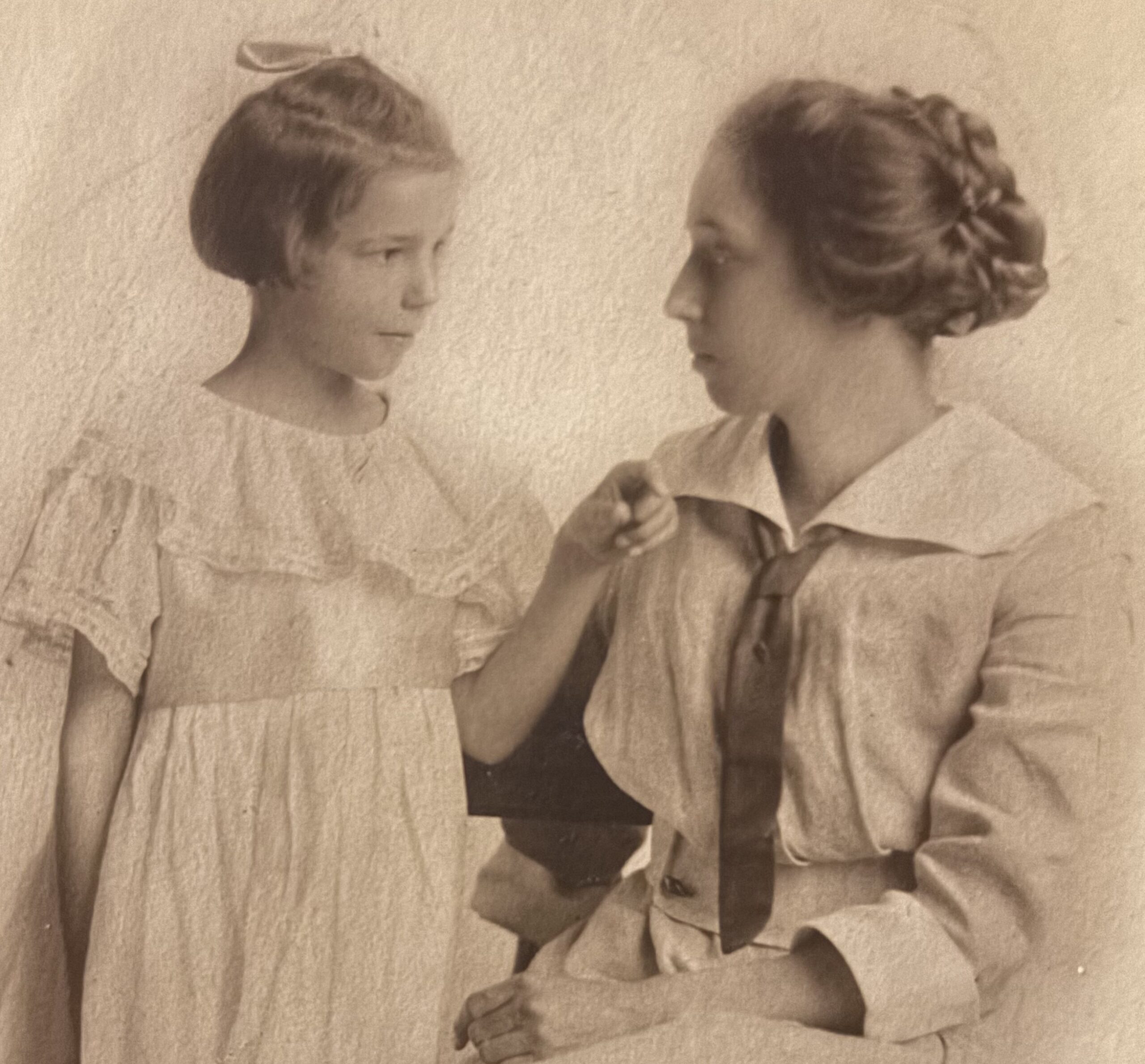
Hazel Currier Vicars
died during childbirth,
March 11, 1920 at 2:45 am
All I was told of my own birth was that it was breach, full term with low birth weight and I was placed in an incubator. I wish I had more information and could talk with my mother about childbirth at this time. She was with me when my first child arrived. My husband was in VietNam at the time and I was living with her and my stepfather.
It’s strange to think that conversation never dwelled on the past. Today, we are aware that a baby in the womb experiences a range of sensations, including hearing the mother’s heartbeat and voice, feeling her movements and emotional state and more. Research suggests that babies can feel the mother’s emotions as hormonal and chemical signals pas through the placenta and that a mother’s stress can affect the baby’s development.
What does the past have to do with the present?
Does tragedy pass from one generation to the next?
And our current era brings us epigenetics.
Epigenetics is the study of heritable changes in gene expression (how genes are turned on or off)
that do not involve alterations to the underlying DNA sequence.
It explores how factors like behavior and environment can influence gene function,
potentially leading to changes in traits and health outcome.
1971 and 1974 Childbirth Happenings
Past
How do you confirm a generational trauma like death during childbirth and its impact on future generations? I know that I inherited hypercoagulation disorders from both of my parents. Blood work ordered by an oral surgeon in 1998 confirmed these genetic disorders which greatly impacted my health and ability to heal. Genetic disorders are measurable; trauma and tragedy are often silent.
Silence was the MO in my family, even when I personally gave birth to my first-born with my Mother not only standing in for my husband who was in VietNam but physically with me in the hospital when my own child-birthing mini-trauma occurred.
And why should I be thinking about this tragedy that happened over one hundred years ago in 1920? In a recent appointment with my PT, he mumbled “generational” as he touched my spinal fusion. I quickly retorted: “That’s my fusion from when I herniated my disc during childbirth.”
And thus a conversation began about my own experiences during the birth of my two children. Our conversation later made me step back and look at my generational maternal issue.
A last-minute saddle block administered with me sitting on the table and my baby ‘cresting’ left me paralyzed for four days! The argument between the resident and my obstetrician stands out in my memory.
“Why are you giving her the block? The baby’s here!” exclaimed the resident, yelling at his colleague.
The obstetrician’s loud voice boomed as he jabbed the needle into my back:
“She wants to see her baby being born!”
I can vividly remember this conversation.
The argument and my waking up paralyzed for four days is what has long been in my memory,
not witnessing the birth of my first child.
And it wasn’t until this appointment that the fact that I did NOT remember seeing my baby’s birth
hit me like a ton of bricks! I have been shocked with much emotion at this realization.
This was fifty-four years ago!
The paralysis from the saddle block led me to an orthopedic doctor when, three years later, having a second child became a topic of conversation. And, I learned that I had a congenial anomaly in my low back – a generational gift?
At any rate, the doctor encouraged me to have another baby; there should be no problems. However, the doctor was wrong.
My second experience with childbirth was natural childbirth – no more saddle blocks for me. This birthing experience herniated my disc at L5-S1. A laminectomy (removal of the disc) and vertebral collapse three weeks after the laminectomy made way for a spinal fusion within nine months. The fusion failed to alleviate the pain. I was twenty-eight years old when a diagnosis of degenerative disc disease and a prognosis of repeated spinal fusions went into my medical chart. My entire spine would be fused before I was fifty.
These past events shaped and changed my life.
Within five years, my path changed radically as I began my search for relief.
And, thus I stepped “out of the the box” in 1977 with JinShin Jyutsu (touch acupuncture),
having no idea that this was my initiation into traveling on a very different Pathway in the future.
Almost fifty years later I find that I am revisiting
not only my own child birthing issues but also my mother’s.
And that is another story.
The Present
Talk and Touch
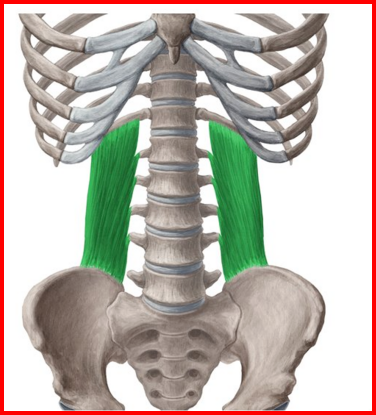
Quadratum Lumborum
www.kenhub.com
The PT’s light touch and release of the spinal fusion ‘generational’ strain was significant. He started out discussing my right side-bending and the Quadratum Lumborum as the source of this current problem. He also observed this would probably create downward pressure on my inguinal hernia, ending up on my spinal fusion with his ‘generational’ comment and my herniated disc/childbirth response.
I have since noticed a difference in my breathing ability – the ability to breath deep into my low back has increased which then affects the widening of my palate (and jaw/throat issue), the depth of my inhalation and the length of my exhalation. My emotional reaction to the realization that I did not witness the birth of my now fifty-four old son after this saddle block nightmare experience has been dramatic.
The emotional and the physical trauma are all a part of this L5-S1 puzzle
….which has been brought to the surface, discussed and released.
Cervical Scalenus Muscles
www.kenhub.com
As I laid down on the treatment table, my Phoenix osteopath held the back of my head in one hand
and with the other hand, gently touched my sternum.
Immediately, I felt my left throat/jaw say ‘hello’. Sensations and tingling rippled through my senses as I felt he was literally touching inside my throat. After several minutes of treatment, deep relaxation arrived.
If you were watching this treatment, it would appear he was sitting, doing nothing.
“What are you treating?” and his response was “scalenus cervical release”.
What I felt inside my body as the treatment progressed was beyond words
accompanied by a spontaneous ‘knowing’ that his hands were so very aware of the underlying
strains creating this ‘unknown’ in my throat.
The possibility of someone being able to ‘touch’ this remained amazing, even after many years of similar experiences.
These past experiences assure me that we are on the right Path.
I am not alone with this ‘unknown’ and gratitude overwhelms me as I leave the office.
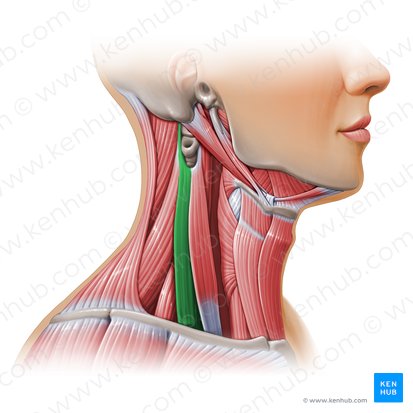
Musculus scalenus medius
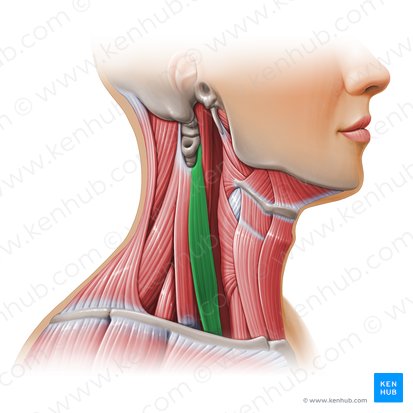
Musculus scalenus anterior
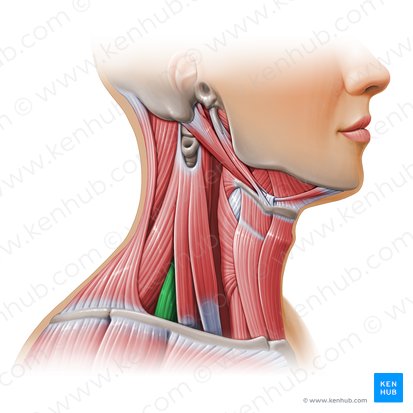
Musculus scalenus posterior
The scalene muscles are the three muscles found on each side of the neck, spanning between the transverse processes of the cervical vertebrae and the upper two ribs. Namely, these muscles are the scalenus anterior (anterior scalene), scalenus medius (middle scalene) and scalenus posterior (posterior scalene). They all belong to the lateral vertebral muscle group.
The main functions of these muscles are flexion, lateral flexion and rotation of the neck. Moreover, they are the accessory muscles of respiration, elevating the ribs during forced inspiration.
Coming Soon